Berlin College of Business and Technology

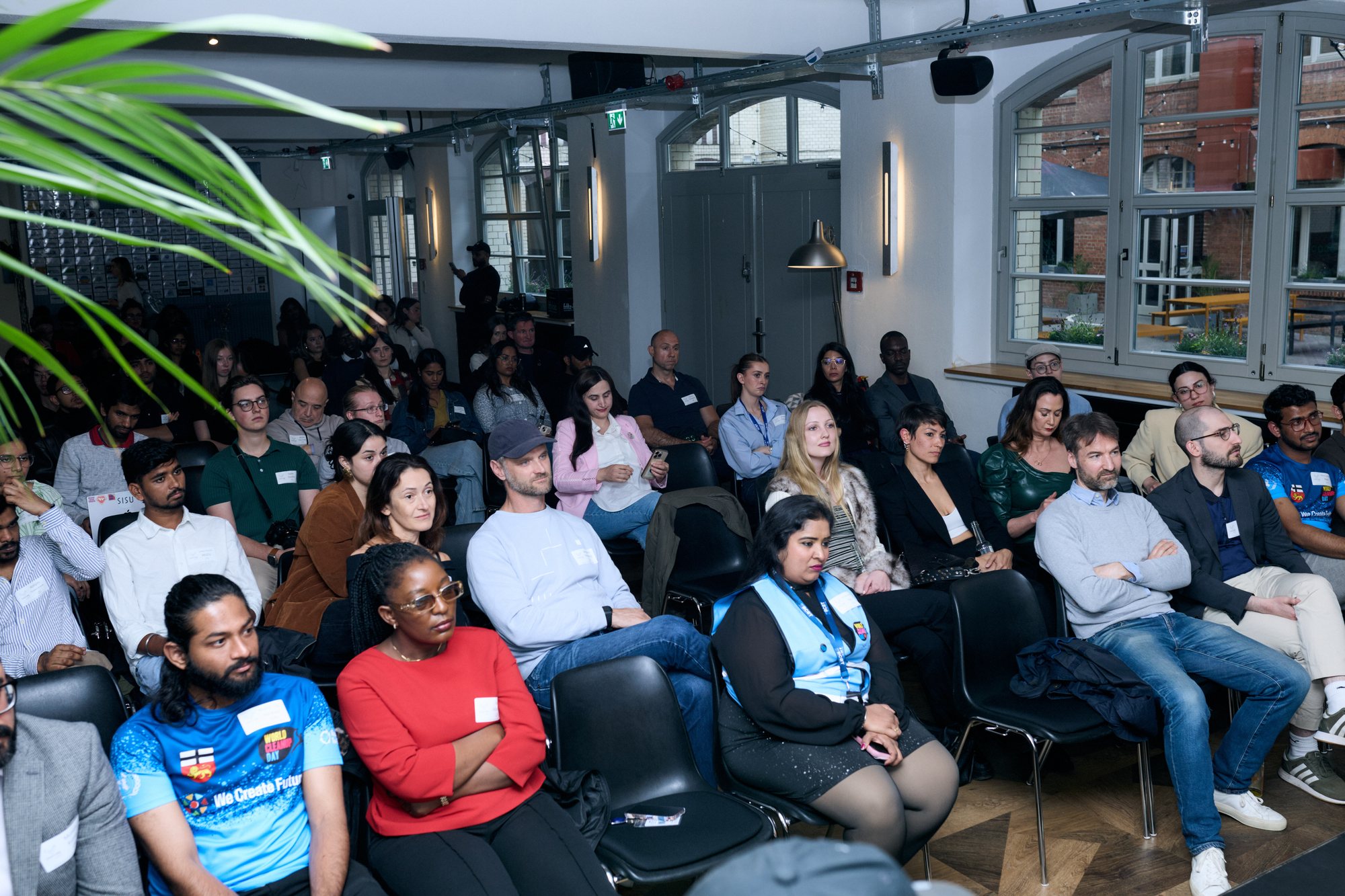
World
Cleanup
Institute

Research, Transfer and Innovation for Sustainability & Impact — connecting science, society and entrepreneurial action.

World Cleanup Institute
for Sustainability & Impact · BCBT Berlin
7
Active Projects
94/100
Impact Score
37
Students, Orgs & Actors
4
Research Clusters
5
IEL Programmes
The Institute

Science, Transfer &
Societal Impact

The World Cleanup Institute (WCI) is an interdisciplinary research and transfer institute at the Berlin College of Business and Technology (BCBT). It bridges rigorous academic inquiry with real-world societal practice — making sustainability measurable, teachable and actionable.

The WCI investigates Environmental Action, Circular Economy, Social Innovation and Impact Measurement. It develops certification frameworks based on ISO 26000, connects students, companies and civil society actors in joint projects — and scales community-driven environmental action across Europe through the We Create Future initiative.

BCBT Berlin We Create Future ISO 26000 World Cleanup Day
BCBT Berlin · World Cleanup Institute
World
Cleanup
Institute
7
Projects
4
Clusters
10
EU Countries
For Sustainability & Impact
Mission

Making sustainable impact visible and measurable through science, knowledge transfer and collective action.

Vision

A networked European community that shapes environment and society through research, innovation and shared action.

Approach

Interdisciplinary. Practice-oriented. Networked across Europe — with BCBT as institutional home and World Cleanup Day as global partner.

INSTITUTE UNITS — CLICK TO EXPLORE
01 — Research Unit
🔬
Research Unit
Four clusters: Environmental Action, Circular Economy, Social Innovation and Impact Measurement — including the WCI Certification Framework.
Explore
02 — Impact Hub
🌍
Impact Hub
Community Projects, We Create Future, Impact Entrepreneurship Lab, Academic & City Partnerships, NGO Collaboration and the World Cleanup Certified Network.
Explore
03 — Impact Learning
🎓
Impact Learning Programme
Project Based Learning, Student Impact Projects, ACASOL Academic Accelerations and Research Assistants — the curricular interface with BCBT.
Explore
5.6 — World Cleanup Certified Network
ISO 26000-Based Certification
Organisations completing the World Cleanup Certification process join a global network of verified impact actors. Scientific framework based on the 7 core subjects of ISO 26000.
Explore →
← Back to Overview
01 · Research Unit
Research Unit
The WCI Research Unit produces applied science at the intersection of environmental action, circular economy, social innovation and impact measurement — grounded in empirical rigour and oriented towards transformative societal change.
Applied Research Transdisciplinary Evidence-Based ISO 26000 BCBT Berlin
Four Research Clusters
CLUSTER 4.1
🌍
Environmental Action & Cleanup Research
CLUSTER 4.2
♻️
Circular Economy & Sustainable Cities
CLUSTER 4.3
🤝
Social Innovation & Community Participation
CLUSTER 4.4
📊
Impact Measurement & Sustainability Verification

Transdisciplinary Methodology

The WCI Research Unit integrates perspectives from environmental science, urban sociology, economics and engineering. Research designs combine quantitative data analysis with qualitative fieldwork, following established standards for applied social science research.

Science-to-Practice Transfer

Findings are not published in isolation — they feed directly into the WCI’s certification frameworks, community programmes and policy recommendations. Every research project is designed with a clear transfer pathway into practice.

← Research Unit
Research Unit · Cluster 4.1
Environmental Action & Cleanup Research
How do communities mobilise for environmental protection, and what measurable impact do they achieve? Cluster 4.1 investigates the social, ecological and behavioural dimensions of citizen-led environmental action — from local neighbourhood cleanups to the global World Cleanup Day movement.
Community CleanupsCivic EngagementEnvironmental BehaviourMobilisation ResearchCitizen Science
190+
Countries, World Cleanup Day
21M+
Participants (WCD 2023)
173kt
Waste Collected (est.)
Growing Civic Mobilisation

Impact of Community Cleanups

Rigorous measurement of environmental and social outcomes of organised cleanup activities — combining waste data, biodiversity indicators and community wellbeing metrics at local and global scale.

Environmental Behaviour Change

Longitudinal research on how participation in cleanup initiatives affects long-term environmental attitudes, pro-environmental behaviour and ecological identity formation in diverse community contexts.

Mechanisms of Societal Mobilisation

Studying the organisational, communicative and motivational mechanics of large-scale citizen mobilisation through the World Cleanup Day movement — including cross-cultural and cross-national comparative analyses.

Civic Participation Models

Models of civic engagement and their transferability: how environmental participation translates into broader civic competence, collective efficacy and democratic participation across different political and cultural contexts.

Citizen Science Integration

Development of data collection protocols enabling participants to contribute scientifically valid waste composition, litter density and ecological condition data during cleanup events.

Policy & Systemic Leverage

Translating findings into evidence-based policy recommendations for municipalities, NGOs and supra-national bodies on maximising the environmental and social co-benefits of community action programmes.

Research Design & Methods

Cluster 4.1 employs a mixed-methods approach: standardised survey instruments (n > 10,000 participants), geospatial waste mapping, longitudinal panel studies, and ethnographic fieldwork within cleanup communities. Statistical analysis follows guidelines of the American Psychological Association and the European Social Survey.

← Research Unit
Research Unit · Cluster 4.2
Circular Economy & Sustainable Cities
Cities consume over 75% of global resources and generate 50% of solid waste — yet they are also the most powerful laboratories for transformative change. Cluster 4.2 develops, tests and evaluates circular economy models for urban contexts, addressing the full lifecycle of materials, products and urban systems.
Circular EconomyUrban MetabolismWaste PreventionResource EfficiencySystems Thinking
75%
Global Resources Consumed by Cities
2.0Gt
Municipal Solid Waste / Year (World Bank)
700B€
EU CE Opportunity by 2030
55%
EU Recycling Target by 2025

CE Models & Strategic Frameworks

Developing and evaluating circular economy frameworks for urban and industrial contexts — drawing on the Ellen MacArthur Foundation’s ReSOLVE framework, industrial ecology and urban metabolism approaches to model material and energy flows.

Sustainable Urban Development

Evidence-based approaches to city planning that integrate circular principles from the ground up: mixed-use density, short supply chains, urban farming, green infrastructure and adaptive reuse of buildings and public spaces.

Waste Prevention & Design

Upstream research on waste prevention through product design, packaging reduction and behavioural interventions — grounded in the EU Waste Framework Directive and the waste hierarchy (prevention, reuse, recycling, recovery).

Resource Efficiency Metrics

Development and application of validated metrics — including Material Flow Analysis (MFA), Life Cycle Assessment (LCA) and the EU Resource Efficiency Scoreboard — to assess and benchmark city-level resource performance.

Small Business CE Transition

Applied transfer research supporting SMEs in implementing circular strategies: business model innovation, supply chain transformation and stakeholder engagement — funded through ESF+ and national BBWA programmes.

Urban Pilot Projects

Co-design and scientific evaluation of CE pilot interventions in Berlin and partner cities — from neighbourhood repair cafés to district-level material passports, providing real-world evidence for scaling.

Theoretical Foundations

Cluster 4.2 draws on industrial ecology, urban metabolism theory, sustainable transition studies (MLP framework) and behavioural economics. Methodologies include Material Flow Analysis (MFA), Life Cycle Assessment (LCA), agent-based modelling and comparative case study research across European cities.

← Research Unit
Research Unit · Cluster 4.3
Social Innovation & Community Participation
Systemic change requires more than technical solutions — it demands new forms of social organisation, participation and collective agency. Cluster 4.3 investigates how social innovations emerge, spread and scale within communities, with a particular focus on youth engagement, participatory design and grassroots sustainability movements.
Social InnovationParticipatory DesignYouth EngagementCo-creationCommunity Resilience
1.8B
Young People Aged 10–24 Globally
67%
Youth Want to Act on Climate (Deloitte 2023)
Higher Impact with Co-design (NESTA Research)
Social Innovation Funding in Europe

Participation Models & Co-creation

Comparative research on co-creation, deliberative democracy and participatory design processes — applying the IAP2 Public Participation Spectrum and Arnstein’s Ladder of Citizen Participation to evaluate depth and quality of community involvement.

Youth Engagement & Agency

Studying what motivates young people to engage in sustainability action and what sustains that engagement over time — drawing on Self-Determination Theory (SDT), collective efficacy research and the science of habit formation.

Social Innovation Ecosystems

Identifying, mapping and analysing social innovations that address systemic community challenges — using the EU’s Social Innovation Framework (BEPA) and OECD typologies to assess novelty, scalability and systemic reach.

Community Design & Place-Making

Human-centred approaches to designing community spaces, programmes and governance structures — integrating design thinking methodology with community development theory and place-based evidence from Berlin neighbourhoods.

Kiez Connection: ESF+ Applied Research

Longitudinal evaluation of the Kiez Connection programme (funded ESF+ / Land Berlin / BBWA) — measuring social cohesion, civic participation and environmental behaviour change in multi-ethnic urban neighbourhoods.

Scaling Social Innovations

Research into the conditions, mechanisms and barriers for scaling social innovations from pilot projects to systemic change — including institutional embedding, policy alignment and ecosystem development.

Methodological Approach

Cluster 4.3 uses Community-Based Participatory Research (CBPR) as its primary methodology, complemented by ethnographic observation, participatory action research, social network analysis and longitudinal mixed-methods evaluation designs. Research is conducted in close collaboration with community partners to ensure relevance and co-ownership of findings.

← Research Unit
Research Unit · Cluster 4.4
Impact Measurement & Sustainability Verification
Without rigorous measurement, sustainability remains rhetoric. Cluster 4.4 develops scientific methods and standards enabling organisations and initiatives to demonstrate their societal impact with credibility, comparability and transparency — anchored in ISO 26000 and established social science methodology.
Impact MeasurementSROITheory of ChangeVerificationISO 26000Standards Development
7
ISO 26000 Core Subjects
17
UN SDGs — Framework Alignment
ESG
Reporting Demand Growing Globally
CSRD
EU Corporate Sustainability Reporting Directive

Impact Measurement Frameworks

Development and validation of scientific frameworks for measuring social, environmental and economic outcomes — including Social Return on Investment (SROI), Theory of Change (ToC) modelling, Most Significant Change (MSC) and Contribution Analysis methodologies.

Programme Evaluation

Rigorous evaluation of NGO, city and community programmes using randomised and quasi-experimental designs where feasible, supplemented by realist evaluation and contribution tracing to establish causality in complex social interventions.

Sustainability Verification Standards

Developing credible, science-backed verification standards for organisational sustainability claims — addressing greenwashing risks through independent audit protocols, evidence hierarchies and inter-rater reliability testing.

WCI Certification Framework →

Applied framework development based on ISO 26000’s seven core subjects, translating guidance into an operational verification pathway for World Cleanup organisations globally. Click to explore.

SDG Alignment & Reporting

Research on aligning local and organisational sustainability activities with the UN Sustainable Development Goals — developing practical SDG localisation toolkits and indicators for community-level tracking compatible with the GRI Standards.

CSRD & ESG Integration

Applied research supporting organisations in meeting EU Corporate Sustainability Reporting Directive (CSRD) and ESG disclosure requirements — with a focus on accessibility for SMEs and civil society actors.

WCI Certification Framework

Housed within Cluster 4.4, the WCI develops an applied certification framework based on ISO 26000 — translated into a practical verification path for World Cleanup organisations worldwide. Scientific backing from the Research Unit ensures the framework meets the highest standards of rigour and independence.

ISO 26000VerificationScientific Framework
← Cluster 4.4
Research Unit · Cluster 4.4 · Certification
WCI Certification Framework
The World Cleanup Institute develops an applied certification framework based on ISO 26000 — translating its seven core subjects of social responsibility into a practical, science-backed verification path for organisations globally. The WCI Certification is inclusive, evidence-based and applicable across industries, sizes and geographies.
ISO 26000Social ResponsibilityScientific FrameworkVerificationSDGsESG

Important Note on ISO 26000

ISO 26000 is not a classical certification standard — it is a comprehensive guidance document on social responsibility. The WCI Certification is an applied framework based on its seven core subjects. Scientific backing from the Research Unit ensures the framework meets the highest standards of rigour and independence.

The Seven Pillars
A comprehensive approach to sustainability leadership

The seven pillars convert ISO 26000 guidance into a practical model. Each pillar addresses a distinct dimension of organisational responsibility — together forming a complete picture of sustainable practice.

The 7 Pillars
Pillar Focus ISO 26000
Organisational Management Decision-making, values, ethics Org. Governance
Human Rights Protection, equality, fair treatment Human Rights
Ethical Work Practices Safe conditions, diversity, fair wages Labour Practices
Environment Climate action, waste, resources The Environment
Fair Business Practices Anti-corruption, supplier responsibility Fair Oper. Practices
Consumer Concerns Safety, data protection, transparency Consumer Issues
Social Commitment Community, volunteering, education Community Dev.
Scope of Certification
Inclusive & Adaptable Across Organisations

The WCI Certification is designed to apply to entities that demonstrate a commitment to sustainability, transparency and responsible practices, regardless of industry or geographical location.

1

Individual Companies or Operational Entities

Certification can be pursued by standalone organisations or business units that wish to benchmark and demonstrate their sustainability practices independently.

2

Corporate Groups and Multi-Entity Organisations

Large organisations with multiple subsidiaries, divisions or global operations may seek certification at a consolidated level, ensuring alignment of practices across different business units and geographies.

3

Supply Chains and Extended Organisations

Certification may also be applied at network level, where suppliers, contractors and partner organisations collectively adopt and integrate sustainability principles under the seven pillars framework — supporting accountability across entire value chains and strengthening transparency and resilience.

Eligibility Criteria
Core Requirements for Applicants

Transparency & Evidence-Based Reporting

Organisations must provide reliable, verifiable data and make available supporting evidence that validates their sustainability claims and practices across all seven pillars.

Alignment with the Seven Pillars

Applicants must actively integrate the seven foundational pillars — Organisational Management, Human Rights, Work Practices, Environment, Fair Business Practices, Consumer Concerns and Social Commitment — into their operations and reporting.

Audit, Documentation & Stakeholder Engagement

Certification requires full cooperation with the verification process: submission of documentation, participation in internal and external audits, and engagement with relevant stakeholders to validate performance and impact.

What Makes This Certification Unique
Bridging Standards and Practice

The World Cleanup Certification (WCC) distinguishes itself by combining the principles of ISO 26000 with the Seven Pillars of World Cleanup into a clear, actionable pathway. Unlike schemes that remain either too broad or too technical, WCC bridges the gap with a balanced, evidence-based and accessible model that applies across industries, sizes and regions.

Attribute Description
✔️ Trusted
Founded on the principles of ISO 26000 and aligned with the UN Sustainable Development Goals (SDGs), the WCC is built on global standards of integrity, transparency and accountability.
🌐 Respected
Recognised for its impartiality, independence and global relevance, the certification maintains credibility across sectors and geographies, supported by rigorous audits and evidence-based assessments.
Desired
Organisations seek the WCC as a mark of leadership, innovation and accountability, reflecting not only compliance but also a deeper commitment to societal impact and environmental stewardship.
Certification Process
Robust Process. Continuous Cycle.
Certification Process Flow
1
Application
Submission and eligibility check
2
Initial Review
Analysis of current reports and policies
3
Gap Identification
Identification of gaps relative to seven pillars
4
Data Collection
Questionnaire completion and evidence submission
5
Analysis & Scoring
Evaluation and visualisation using radar charts
6
Verification & Audit
Evidence checks, site audits and interviews
7
Certification Decision
Issuance of certification or feedback with action plan
8
Continuous Improvement & Renewal
Annual progress and recertification every 3 years

Scientific Foundation

The WCI Certification Framework is developed by the Research Unit (Cluster 4.4) based on ISO 26000 guidance. It is aligned with the UN SDGs, the GRI Standards and the EU Corporate Sustainability Reporting Directive (CSRD) — ensuring relevance for organisations operating under current and emerging sustainability disclosure requirements.

← Back to Overview
02 · Impact Hub
Impact Hub
The operational interface between BCBT and society — community projects, entrepreneurship, partnerships and the World Cleanup Certification Network.
5.1

Community Projects

Conference/Summit, We Create Future Initiative with Kampagne, Panel & Podcast.

5.2

Impact Entrepreneurship Lab

Five programmes from Startup Programme to Circular Economy Labs.

5.3

Academic Partnerships

Joint research, Horizon Europe, Erasmus+ and student exchange.

5.4

NGO Collaboration

Co-creation, research networks and community building with civil society.

5.5

City Partnerships

Pilot projects, urban sustainability programmes and municipal cooperation.

5.6

World Cleanup Certified Organisations Network

ISO 26000-based certification with three sub-programmes.

← Impact Hub
Impact Hub · 5.1
Community Projects
Local sustainability initiatives, civic engagement and community-driven projects — anchored by the annual Conference & Summit and the We Create Future Initiative.
5.1.1

Conference / Summit

Annual highlight: Deep Tech Award + AI + Sustainability. Keynotes, panels and live demos.

5.1.2

We Create Future Initiative

Year-round co-creation platform with Kampagne One Bag, Panel and Podcast.

← Community Projects
Community Projects · 5.1.1
Conference / Summit
Our annual Summit brings together founders, cities, researchers and investors — for exchange, inspiration and concrete collaborations at the intersection of technology and sustainability.
Deep Tech AwardAI + SustainabilityAnnual · BCBT Berlin

🏆 Deep Tech Award

Annual recognition for technological innovations with a clear sustainability focus. Open to startups, research teams and institutions.

🤖 AI + Sustainability

Conference format on AI in service of sustainability — keynotes, panels and live demos from research and industry.

Networking

Curated sessions connecting founders, city representatives, NGOs and investors around the WCI ecosystem.

We Create Future Stage

Public stage integrated with the WCF Initiative — campaign launches, panel discussions and podcast live recordings.

← Community Projects
We Create Future
We Create Future
World Cleanup Day bags

A better World
starts with
you.

We Create Future
100K+
Cleanup Bags Distributed
≈173t
Waste Collected
100K+
Participants
10
European Countries 2026
The Concept

Cleanup as a Community Platform

We Create Future turns environmental action into a structured platform. Each group gets a free kit, organises a cleanup, documents their impact and keeps the kit for future use — not a one-time event, but a continuous contribution that grows.

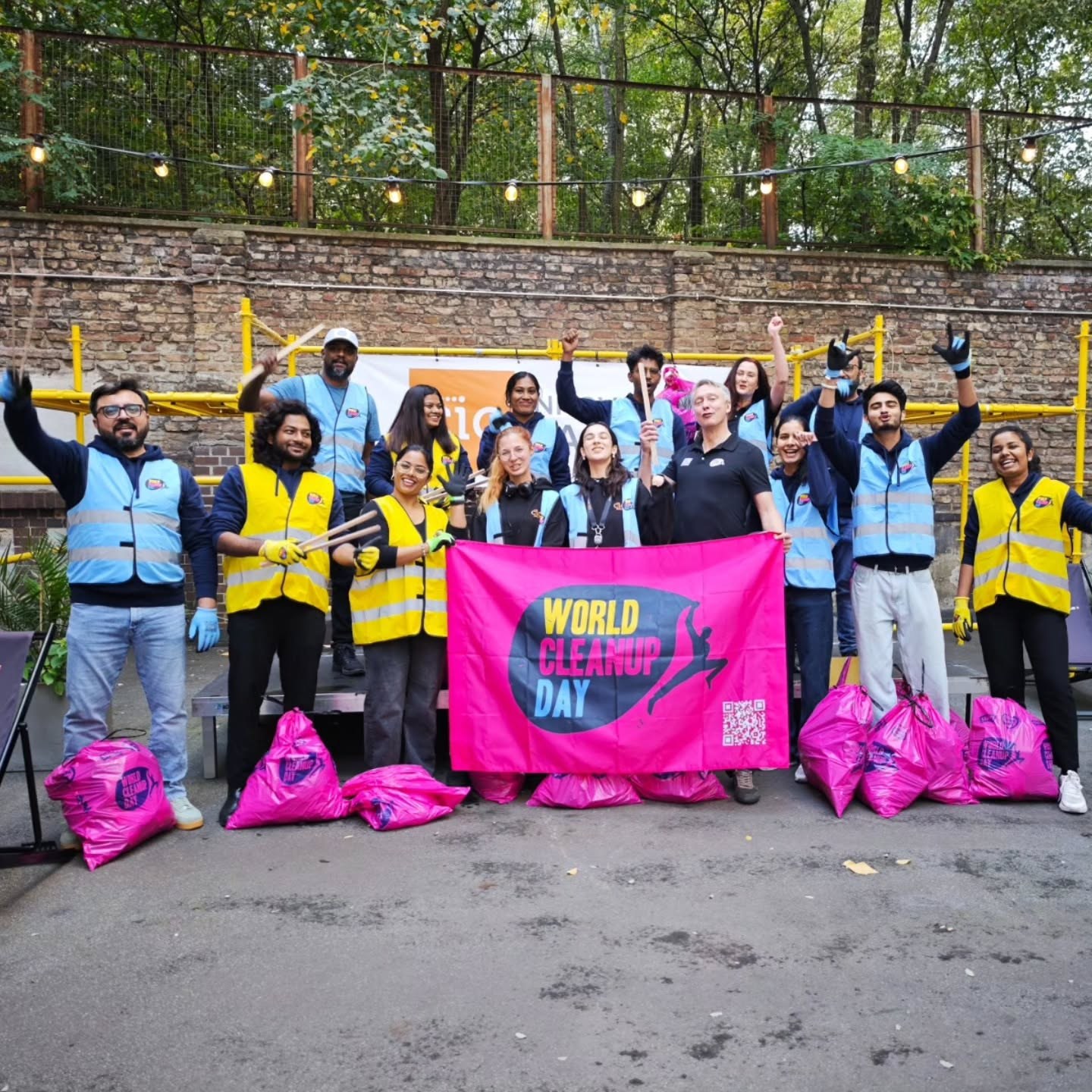
World Cleanup Day volunteers weighing waste
WCD Action
Children with WCD vests and cleanup tools
Map
How It Works
6 simple steps
01

Register

Sign up your school, club or group. Any public space qualifies — parks, streets, rivers, beaches. No experience needed.

02

Receive Your Kit

Your free World Cleanup Kit arrives with gloves, vests, grabbers and recycled bags, matched to your group size.

03

Take Action

Go out and clean up. Collect, sort and weigh — turning your action into a measurable environmental contribution.

04

Document Impact

Log your results. Your data feeds into a growing picture of community-driven environmental change across Europe.

05

Keep the Kit

The kit stays with your class or club for future actions. One event becomes a permanent, reusable resource.

06

Close the Loop

Jerseys are returned, recycled and made into new kits — a genuine closed-loop circular system.

Programmes
Three formats — one shared mission
WCD green gloves circle
Schools & Groups

🎒 World Cleanup Kits

The World Cleanup Kit turns environmental action into an exciting adventure — designed for children and community groups of all ages. Each kit contains everything needed for a safe, age-appropriate cleanup.

Safety vests from recycled materials (multiple sizes)
Work gloves from recycled materials
Wooden litter pickers
World Cleanup Day flag (recycled)
Cleanup bags — 100% recycled material
Weighing scale to measure collected waste
XS · S · L · XL 100% Recycled Free Kit
Sports
Sports Clubs & Teams

🏃 Jersey Kit Team

Anyone who loves outdoor sport, wants to do good for the environment and raise awareness — is naturally motivated to join. The concept of plogging (jogging while picking up litter) is at its heart: turn your next training session into a cleanup action.

Perfect for: Football clubs · Running & cycling groups · Schools sports teams · Triathlon & athletics clubs · Fitness studios
11 jerseys per kit — printed with your club logo
Made from 100% recycled materials
Return → recycle → new jersey: true closed loop
Includes cleanup bags, gloves & litter pickers
11-Kit Club Branding Circular Take-back Free Kit
BCBT students
WCF Scholarship

🎓 We Create Future Scholarship

For Visionaries Committed to a Greener Future

Do you have a vision for a more sustainable future? Are you passionate about design, innovation, or circular fashion — and ready to take the next step?

Let's Do It! and its partners are awarding a fully funded international Master's scholarship in Fashion Management & Design, hosted in Berlin and/or Rome. The most inspiring candidate will not only receive a scholarship — they'll become an ambassador for a new generation of purpose-driven designers.

Who is eligible: Submit a business idea selected for its innovative approach to sustainability. Award up to 100% tuition fee waiver.
BCBT Berlin College of Business and Technology
Apply Now →
Circular by Design
♻️
From Recycled
Vests, gloves and jerseys manufactured from recycled materials.
🏫
Stays With You
Kits remain with classes and clubs for ongoing use, not just single events.
🔄
Returned & Reborn
Jerseys returned and processed into new jerseys. True closed loop.
📊
Measurable Impact
Every cleanup documented. You see exactly how much your action achieved.
Pilot 2026
Launch in
10 Countries

We Create Future launches in 2026 as a European pilot — connecting communities, sharing knowledge and building a collective movement for a cleaner continent.

🇩🇪 Germany 🇦🇹 Austria 🇨🇭 Switzerland 🇫🇷 France 🇳🇱 Netherlands 🇸🇪 Sweden 🇩🇰 Denmark 🇫🇮 Finland 🇪🇸 Spain 🇵🇱 Poland
Initiators
We Create Future

We Create Future

Community platform for environmental action.

wecreatefuture.world
World Cleanup Day

World Cleanup Day

Largest civic cleanup movement — millions of volunteers in 190+ countries.

worldcleanupday.org
Let's Do It! World

Let's Do It! World

Global civic movement in 160+ countries.

letsdoitworld.org
Partners
World Cleanup Institute

World Cleanup Institute

worldcleanup.org
EQA

EQA

eqasce.de
SportHubs

SportHubs

sporthubs.de
Cofresco

Cofresco International

cofresco.com
Ready to Get Started?
It starts with
filling one bag.

Register your cleanup and request a free World Cleanup Kit — for schools, clubs and community groups. No cost, no experience needed.

World Cleanup bags
← We Create Future
We Create Future · 5.1.2.1
Kampagne One Bag
One bag. One action. Global reach. The One Bag Campaign mobilises individuals, organisations and cities to take a concrete first step in environmental action — and share it.
wecreatefuture.worldMobilisationGlobal Campaign

Concept

Participants collect one bag of waste in their community and share the action — creating a visible, scalable movement.

Platform

wecreatefuture.world serves as the digital hub — tracking actions, connecting participants and amplifying impact stories.

Community Integration

Students, NGOs, cities and companies can join the campaign and embed it in their own programmes.

Impact Tracking

Campaign actions are documented and feed into the WCI Impact Score and research on civic engagement.

← We Create Future
We Create Future · 5.1.2.2
Panel
Public discussion formats with experts from science, policy, cities and practice — creating spaces for honest conversations about sustainability, impact and systemic change.
Public DiscourseExpert FormatsHybrid Events

Format

Moderated panel discussions — in-person, hybrid and streamed — on topics from circular economy to social innovation.

Speakers

Researchers, city representatives, NGO leaders, founders and policymakers in focused conversation.

Conference Integration

Panels are a core element of the annual Conference & Summit and can be held independently throughout the year.

Documentation

All panels are recorded, transcribed and published as part of the WCI knowledge base and podcast feed.

← We Create Future
We Create Future · 5.1.2.3
Podcast
Conversations with impact actors, founders, researchers and city makers — produced in collaboration with BCBT students as a media platform reaching beyond the WCI community.
Student ProductionInterviewsMedia Reach

Production

Co-produced with BCBT students — providing real media production experience as part of the Impact Learning Programme.

Guests

Impact actors, NGO leaders, startup founders, city officials and WCI researchers share their stories and insights.

Distribution

Available on all major podcast platforms — extending WCI reach to audiences beyond Berlin and the academic world.

Research Link

Podcast episodes are linked to WCI research themes — making scientific findings accessible to a general audience.

← Impact Hub
Impact Hub · 5.2
Impact Entrepreneurship Lab
Five programmes guiding people from sustainable ideas to real ventures — in direct cooperation with the BCBT Startup Hub.

Ideas & Research

Student projects & research findings

Innovation Workshops

Design Thinking & Co-Creation

Startup Programme

Business Model & Pitch

Incubation & CE Labs

Mentoring & Pilot Projects

Impact Venture

Founded startup · Scale-up

5.2.1

🚀 Startup Programme

Business model development, impact measurement, pitch training and mentoring.

5.2.2

🛠 Innovation Workshops / Panels

Design Thinking, Co-Creation, Expert Panels and Prototyping sessions.

5.2.3

🎓 Guest-Lectures

BCBT Startup Hub series — Founder Talks, Investor Sessions, Sustainability Experts.

5.2.4

🏢 Startup Incubation

Mentoring, investor networks, funding programme support, Horizon Europe.

5.2.5

♻️ Circular Economy Labs

CE model development, resource loops, urban CE hackathons and pilot projects.

← Entrepreneurship Lab
IEL · 5.2.1
Startup Programme
Structured programme guiding sustainable startup founders from concept to investment-readiness through business model development, impact measurement and pitch training.
Business ModelImpact MeasurementPitch TrainingMentoring

Business Model Development

Canvas-based and lean startup approaches adapted for impact-first sustainable ventures.

Impact Measurement

Applying WCI research tools to define, track and communicate the startup's societal impact.

Pitch Training

Investor-ready pitch preparation including storytelling, financials and impact narrative.

Mentoring

Access to experienced founders, impact investors and sustainability experts in the WCI network.

← Entrepreneurship Lab
IEL · 5.2.2
Innovation Workshops / Panels
Hands-on formats for developing new ideas rapidly — from Design Thinking sprints to expert panel co-creation sessions with cities, NGOs and startups.
Design ThinkingCo-CreationExpert PanelsPrototyping

Design Thinking Sessions

Human-centred problem solving applied to real sustainability challenges from partner cities and NGOs.

Co-Creation Workshops

Multi-stakeholder workshops bringing together students, organisations and researchers.

Expert Panels

Focused panel discussions with practitioners — feeding insights directly into the IEL programme.

Rapid Prototyping

From idea to testable prototype in one session — with structured feedback from the WCI network.

← Entrepreneurship Lab
IEL · 5.2.3
Guest-Lectures
Regular lecture series bringing founders, investors and sustainability experts directly into the WCI community — in partnership with the BCBT Startup Hub.
BCBT Startup HubFounder TalksInvestor SessionsSustainability Experts

BCBT Startup Hub Series

Regular lecture programme in cooperation with the BCBT Startup Hub — open to all students and staff.

Founder Talks

Impact entrepreneurs share their journeys — from idea to scale — with honest discussion of challenges.

Investor Sessions

Impact investors and VCs explain their thesis, criteria and how to approach fundraising for sustainable ventures.

Deep Tech & Sustainability

Experts at the intersection of AI, technology and environmental impact — connected to the Conference format.

← Entrepreneurship Lab
IEL · 5.2.4
Startup Incubation
Sustained support for impact startups beyond the initial programme — connecting founders with investors, funding programmes and pilot project opportunities.
MentoringInvestor NetworkHorizon EuropeFunding

Mentoring & Coaching

Ongoing 1:1 support from WCI-connected founders and business mentors through the venture journey.

Investor Network Access

Warm introductions to impact investors, venture funds and angel networks aligned with sustainability.

Horizon Europe & Erasmus+

Support with EU funding applications — WCI research credentials strengthen proposals significantly.

Pilot Projects with Cities

Connecting incubated startups with WCI city partners for real-world pilot deployments.

← Entrepreneurship Lab
IEL · 5.2.5
Circular Economy Labs
Intensive lab sessions developing circular economy solutions — from product design and resource loop modelling to urban CE hackathons and pilot projects with partner cities.
CE ModelsResource LoopsHackathonsPilot Projects

CE Model Development

Hands-on development of circular business models across product, service and city-system levels.

Resource Loop Design

Mapping and redesigning material flows — connecting waste streams to new value creation opportunities.

Urban CE Hackathons

Intensive multi-day events developing city-scale circular economy solutions with real municipal partners.

Pilot Projects

Promising concepts are piloted with WCI partner cities — tested in real environments with measurable outcomes.

← Impact Hub
Impact Hub · 5.3
Academic Partnerships
Formal cooperation with universities and research institutions worldwide — for joint research projects, EU-funded programmes, publications and student exchange.
Horizon EuropeErasmus+Joint ResearchStudent Exchange

Joint Research Projects

Collaborative research with international academic partners — publishing in peer-reviewed journals and conferences.

Horizon Europe

WCI as consortium partner or lead applicant in EU research and innovation programmes.

Erasmus+ Cooperation

Staff and student mobility, joint curriculum development and strategic partnership projects.

Publications & Conferences

Shared academic output — connecting WCI research to the international sustainability science community.

← Impact Hub
Impact Hub · 5.4
NGO Collaboration
Working with civil society organisations, international network partners and mission-aligned organisations through project-based cooperation, research support and community building.
Civil SocietyCo-CreationResearch NetworksCommunity Building

Impact Measurement Support

WCI research tools applied to help NGOs measure and communicate their societal impact more credibly.

Co-Creation of Programmes

Joint development of community programmes, campaigns and initiatives between WCI and NGO partners.

Research Network Access

NGO partners gain access to WCI research outputs, methodologies and the international academic network.

World Cleanup Day Connection

Direct link to the global World Cleanup Day movement and the Let's Do It network of civil society organisations.

← Impact Hub
Impact Hub · 5.5
City Partnerships
Formal cooperation agreements with municipalities — developing pilot projects for sustainable urban development, circular economy and civic participation with measurable outcomes.
Urban SustainabilityPilot ProjectsPolicy AdvisoryCo-Design

Pilot Projects & Co-Design

WCI student teams and researchers working directly with city administrations on sustainability challenges.

IEL Startup Pilots

Incubated startups deployed in partner cities — creating real-world testing environments for new solutions.

Policy Advisory

WCI research informing municipal sustainability strategies, circular economy plans and community programmes.

CE Lab Hackathons

Urban Circular Economy hackathons hosted in partner cities — mobilising local talent around systemic challenges.

← Impact Hub
Impact Hub · 5.6
World Cleanup Certified Organisations Network
Organisations that complete the ISO 26000-based World Cleanup Certification process join a global network of verified impact actors — cities, NGOs, companies and institutions committed to measurable, transparent sustainability.
ISO 26000CertificationVerified ImpactGlobal Network
7
Pillars of Responsibility
8
Certification Steps
24mo
Certification Validity
ISO26000
International Standard
5.6.1

Certification Process

The structured 8-step pathway from application to certified status — guided by WCI specialists.

5.6.2

Certified Community Network

The global network of verified World Cleanup organisations — visibility, exchange and collaboration.

5.6.3

Annual Certification Review

Yearly re-verification ensuring certified organisations maintain and improve their impact commitments.

The Seven Pillars
A comprehensive approach to sustainability leadership

The seven pillars convert ISO 26000 guidance into a practical model. Each pillar addresses a distinct dimension of organisational responsibility — together forming a complete picture of sustainable practice.

The 7 Pillars of World Cleanup Certification
Pillar Focus ISO 26000
Organisational Management Transparent decision-making, values, ethics, governance Org. Governance
Human Rights Protection, equality, fair treatment Human Rights
Ethical Work Practices Safe conditions, diversity, fair wages Labour Practices
Environment Resource protection, climate action, waste reduction The Environment
Fair Business Practices Anti-corruption, ethical behaviour, supplier responsibility Fair Oper. Practices
Consumer Concerns Product safety, data protection, transparency Consumer Issues
Social Commitment Community involvement, volunteering, education Community Dev.
Certification Flow
Robust Process. Continuous Cycle.

World Cleanup Certification follows a proven process ensuring transparency, consistency, and alignment with international standards. The flow is continuous — each cycle feeds improvements for sustained responsibility.

World Cleanup Certification Process Flow
1
Application
Submission and eligibility check
2
Initial Review
Analysis of current reports and policies
3
Gap Identification
Identification of gaps relative to the seven pillars
4
Analysis & Scoring
Evaluation and visualisation using radar charts
5
Verification & Audit
Evidence checks, site audits and interviews
6
Certification Decision
Issuance of certification or feedback with action plan
7
Continuous Improvement & Renewal
Annual progress and recertification every 3 years

Scientific Foundation: ISO 26000

The certification framework is developed by the WCI Research Unit (Cluster 4.4) and covers ISO 26000’s seven core subjects: Organisational Governance, Human Rights, Labour Practices, The Environment, Fair Operating Practices, Consumer Issues, and Community Involvement & Development.

← World Cleanup Certified Network
Certified Network · 5.6.1
Certification Process & Onboarding
A structured, transparent 8-step pathway guiding organisations from initial application through self-assessment, verification and certification — with ongoing WCI expert support throughout.
ApplicationGap AnalysisVerification & AuditCertificationRenewal
World Cleanup Certification Process Flow
01

Application

Interested organisations begin by submitting a proposal of interest outlining their background, motivation and purpose for seeking certification.

02

Quick Interview

A focused 15-minute session clarifying the applicant’s objectives, expectations and suitability. Provides initial guidance and orientation.

03

Gap Identification

Identification of gaps relative to the seven pillars. The applicant’s current practices are benchmarked against ISO 26000 requirements.

04

Data Collection

Completion of a detailed questionnaire and submission of evidence documents supporting the applicant’s sustainability practices.

05

Analysis & Scoring

Comprehensive evaluation and visualisation of results using radar charts. Cross-checking alignment with certification requirements.

06

Verification & Audit

Evidence checks, site audits and interviews. Upon successful completion, the applicant is awarded certification.

07

Certification & Benefits

Formal recognition, access to resources, networking opportunities and community acknowledgement. Certification ID recorded in the official database.

08

Renewal after 24 Months

Certifications are valid for 24 months. Renewal requires updated documentation and evidence of continued activities and ongoing compliance.

Who Can Apply

Cities, NGOs, companies, academic institutions and community networks active in sustainability and environmental action.

Assessment Framework

Based on ISO 26000’s seven core subjects — adapted for practical evaluation across all types of organisations.

WCI Expert Support

Dedicated WCI staff guide applicants through every step — from gap identification to evidence collection and audit preparation.

Timeline

Typical certification process takes 8–12 weeks from application to certification decision. Renewal takes 4–8 weeks.

← World Cleanup Certified Network
Certified Network · 5.6.2
Certified Community Network
The global network of verified World Cleanup organisations — connected by shared commitment to measurable sustainability impact, ISO 26000 principles and the World Cleanup movement.
Global NetworkVerified MembersExchangeCollaboration

Public Visibility

Certified organisations are listed on the WCI Certified Network registry — a public marker of verified sustainability commitment.

Network Exchange

Regular virtual and in-person exchange between certified organisations — sharing best practices, challenges and innovations.

WCI Research Access

Members gain access to WCI impact measurement tools, research publications and methodological resources.

Conference & Summit

Certified organisations are featured partners at the annual WCI Conference — increasing their visibility and reach.

← World Cleanup Certified Network
Certified Network · 5.6.3
Annual Certification Review
Certification is not a one-time badge — it is a commitment to continuous improvement. Annual reviews and 24-month renewal cycles ensure certified organisations maintain and advance their sustainability impact.
Annual ReviewContinuous ImprovementRe-Certification

Progress Report

Certified organisations submit an annual impact report documenting progress against commitments made during certification.

WCI Evaluation

WCI Research Unit reviews progress reports and flags areas where additional support or improvement is needed.

Re-Certification Decision

Organisations meeting the annual criteria retain certified status; others receive a structured improvement plan.

Impact Score Update

Annual review results feed into the WCI Impact Score — for both the individual organisation and the overall institute score.

← Back to Overview
03 · Impact Learning Programme
Impact Learning Programme
The curricular interface between WCI and BCBT education — students from all departments engage in real-world impact projects as part of their accredited study modules.
6.1

📚 Project Based Learning

Students work on real impact projects linked to modules across all BCBT departments.

6.2

🎯 Student Impact Projects

Independent student-led projects with real community impact and WCF Initiative integration.

6.3

🎓 ACASOL

Academic Accelerations — intensive format bridging learning and impact entrepreneurship.

6.4

🔬 Research Assistants

Scientific support roles (HiWis) embedded in active WCI Research Unit projects.

← Impact Learning
Impact Learning · 6.1
Project Based Learning
Students work on real impact projects as part of their accredited study modules — topics sourced from the Impact Hub, Research Unit and partner organisations, supervised by BCBT academic staff.
All DepartmentsReal ProjectsAcademic CreditImpact Hub Topics

Project Sources

Challenges come from WCI partner cities, NGOs and research clusters — ensuring real-world relevance and measurable outcomes.

Cross-Department Teams

Projects intentionally mix students from Business, Technology and Entrepreneurship departments for interdisciplinary approaches.

Academic Supervision

BCBT Academic Staff supervise projects — connecting learning outcomes to module requirements and grading criteria.

Impact Documentation

Student project outcomes are documented and feed into the WCI Impact Score and partner reporting.

← Impact Learning
Impact Learning · 6.2
Student Impact Projects
Independent student-led project work with genuine community impact — connected to the We Create Future Initiative and documented publicly as part of the WCI impact portfolio.
Student-LedCommunity ImpactWCF IntegrationPublic Documentation

Student Initiative

Students propose and lead their own sustainability projects — with WCI providing mentoring, networks and resources.

Community Focus

Projects address real local or global sustainability challenges — with clear impact targets and measurement plans.

WCF Integration

Standout student projects are featured in the We Create Future campaign — amplifying student impact and visibility.

Presentation & Documentation

All projects are formally presented and documented — building student portfolios and WCI knowledge assets.

← Impact Learning
Impact Learning · 6.3
ACASOL — Academic Accelerations
An intensive academic acceleration format bridging the gap between study and impact entrepreneurship — for highly engaged students who want to move faster and go deeper.
Academic AccelerationsIntensive FormatEntrepreneurship Bridge

Contact ACASOL

For programme details, admission requirements and next cohort dates:

Intensive Format

Compressed, high-intensity learning sprints — combining academic theory with immediate practical application in WCI projects.

IEL Connection

ACASOL graduates are fast-tracked into the Impact Entrepreneurship Lab's Startup Programme — bridging learning and founding.

Cohort Model

Small cohorts of 8–12 students — enabling deep collaboration, peer learning and lasting networks.

Research Integration

ACASOL participants engage directly with WCI Research Unit clusters — applying scientific methods to their projects.

← Impact Learning
Impact Learning · 6.4
Research Assistants
Scientific support roles (HiWis) embedded in active WCI Research Unit projects — a qualification pathway for students pursuing academic careers in sustainability research.
HiWisResearch SupportAcademic CareerCluster Integration

Cluster Embedding

Research Assistants are assigned to specific Research Unit clusters — working alongside faculty on active projects.

Scientific Methods

Hands-on experience with research methodology, data collection, analysis and academic writing and publication.

Certification Connection

RA work may include supporting ISO 26000 framework development and impact verification research in Cluster 4.4.

Career Pathway

Strong Research Assistants are supported in applying for doctoral programmes, research fellowships and academic positions.

← Back to Overview
04 · Team & People
Team & People
The WCI is driven by an interdisciplinary team of researchers, project managers and dedicated students — united by a shared commitment to measurable societal impact.
7.1

🏛 Institute Leadership

Scientific direction, institute management and strategic leadership of the World Cleanup Institute.

7.2

🔬 Research Team

Cluster researchers, postdocs and associated scientists from the four research clusters.

7.3

📚 Research Assistants / HiWis

Student research assistants embedded in active research projects across the four clusters.

7.4

🌐 Advisory Board

International advisory body from academia, practice and civil society providing strategic orientation.

← Team & People
Team · 7.1
Institute Leadership
The Institute Leadership combines scientific excellence with strategic direction — responsible for research quality, partner relations and the institutional development of the WCI.
LeadershipStrategyScience
HH

Hon.-Prof. Holger Holland

Director · World Cleanup Institute
Honorary Professor · BCBT Berlin
DirectorResearch
MN

Maloth Surrender Naik

Institute Manager
Operations & Project Coordination · WCI Berlin
ManagementOperations
SK

Samanth Kumar

Administration
World Cleanup Institute · BCBT Berlin
Administration
DS

Daniela Schwerdt

Communication
World Cleanup Organisation
CommunicationPR
NM

Narendhar Malavath

Media
World Cleanup Institute · BCBT Berlin
Media

Contact Institute Leadership

Enquiries about cooperations, research collaboration and institutional matters:

  • [email protected]
  • World Cleanup Institute · BCBT Berlin · Lohmühlenstraße 65, 12435 Berlin
← Team & People
Team · 7.2
Research Team
The WCI Research Team brings together cluster leads and associated researchers — interdisciplinarily networked across environmental science, sociology, economics and engineering.
Cluster 4.1Cluster 4.2Cluster 4.3Cluster 4.4
AT

Prof. Dr. Anabel Ternes von Hattburg

Research Lead · Sustainability Science
Impact Research & Social Innovation
Research LeadSustainability
HH

Hon.-Prof. Holger Holland

Director & Research Team
World Cleanup Institute · BCBT Berlin
DirectorResearch
← Team & People
Team · 7.3
Research Assistants / HiWis
Research Assistants and student researchers (HiWis) are embedded in active WCI projects, bridging academic study and research practice — forming the WCI’s junior talent network.
HiWi PositionsApplied ResearchCareer PathwayApplications Open
MM

Malika Malika

Research Assistant / HiWi
World Cleanup Institute · BCBT Berlin
HiWiResearch Support
UR

Uma Raju

Research Assistant / HiWi
World Cleanup Institute · BCBT Berlin
HiWiResearch Support

Open HiWi Positions

The WCI regularly offers new research assistant positions for BCBT students. Requirements: enrolled at BCBT, interest in sustainability research, 8–16 hours/week.

  • Apply: [email protected]
  • Duration: semester-based or project-based
  • Remuneration per TV-L HiWi rate Berlin
← Team & People
Team · 7.4
Advisory Board
The international Advisory Board of the WCI brings together experts from academia, practice, civil society and policy — providing strategic guidance, external quality assurance and network development.
InternationalAcademiaPracticeCivil Society
AT

Prof. Dr. Anabel Ternes von Hattburg

Advisory Board · Science & Research
Sustainability, Impact Research
ScienceImpact Research
VD

Dr. Valdrin Dervishaj

Advisory Board · Research & Practice
World Cleanup Institute
AdvisoryResearch
DL

Dr. Dr. Daniel Linotte

Advisory Board · Policy & International
World Cleanup Institute
PolicyInternational

Role of the Advisory Board

Strategic guidance for the Institute Leadership, annual quality review of the research agenda, and network expansion.

Term & Composition

Board members are appointed for 3 years — renewable. Minimum 5 members from 3 sectors.

Meetings & Format

At least 2 board meetings per year (hybrid) plus ad-hoc consultations on strategic matters.

Board Membership

Nominations may be submitted via the Institute Leadership — decision by existing board members.

← Back to Overview
05 · Events & Dates
Events & Dates
Das WCI ist kontinuierlich aktiv — in Berlin, europaweit und digital. Von der Jahreskonferenz bis zum Community-Workshop: Alle Veranstaltungsformate im Überblick.
8.1

🏛 Annual Conference / Summit

Das jährliche WCI-Leitformat — Keynotes, Panels, Networking und Launch neuer Forschungsergebnisse.

8.2

🌍 WCF Events & Actions

We Create Future Veranstaltungen, One Bag Aktionen, WCD-Mobilisierungsevents und Community-Sprints.

8.3

🛠 Workshops & Panels

Design Thinking Workshops, Expert-Panels, Innovation Labs und Co-Creation Sessions für alle Zielgruppen.

8.4

📅 Events Calendar 2026

Vollständige Übersicht aller geplanten WCI-Termine für das Jahr 2026 — mit Anmeldeinformationen.

← Events & Dates
Events · 8.1
WCI Annual Conference / Summit
Die WCI Annual Conference bringt Forschende, Praktikerinnen, Stadtvertreterinnen, NGOs und Startups für zwei Tage zusammen — zur Präsentation neuer Erkenntnisse, zum Dialog über Systemlösungen und zum Aufbau des WCI-Netzwerks.
JahreseventBerlin2-tägigHybrid

Keynotes & Plenum

Hochrangige Keynote-Speakers aus Wissenschaft, Wirtschaft und Politik setzen thematische Impulse zum Jahresschwerpunkt.

Forschungspräsentationen

Cluster-Leitungen und assoziierte Forschende präsentieren aktuelle Ergebnisse — mit Zeit für wissenschaftliche Diskussion.

We Create Future Stage

Öffentliches Bühnenformat integriert in die Konferenz — für Campaign-Launches, Community-Acts und Live-Podcast-Aufnahmen.

Zertifizierungs-Award

Feierliche Übergabe der WCI Certified Network Urkunden an neue Mitglieder im Plenum der Jahreskonferenz.

Startup Pitch Stage

IEL-Startups pitchen vor Investorinnen und Partnerorganisationen — mit öffentlichem Publikum und Jury-Feedback.

Networking & Ausstellung

Kuratierte Networking-Sessions, Posterpräsentationen und Partnerausstellung — Raum für informellen Wissensaustausch.

WCI Annual Conference 2025

Datum: Herbst 2025 (genaues Datum in Abstimmung) · Ort: BCBT Berlin, Campus Lohmühlenstraße 65, · Format: Hybrid (Präsenz + Livestream)

← Events & Dates
Events · 8.2
WCF Events & Actions
We Create Future ist das ganzjährige Aktivierungsformat des WCI — mit Community-Sprints, Kampagnen-Aktionen und öffentlichen Panels. Herzstück: der World Cleanup Day im September.
GanzjährigCommunityWCDOne Bag
20
Sep 2025

World Cleanup Day 2025

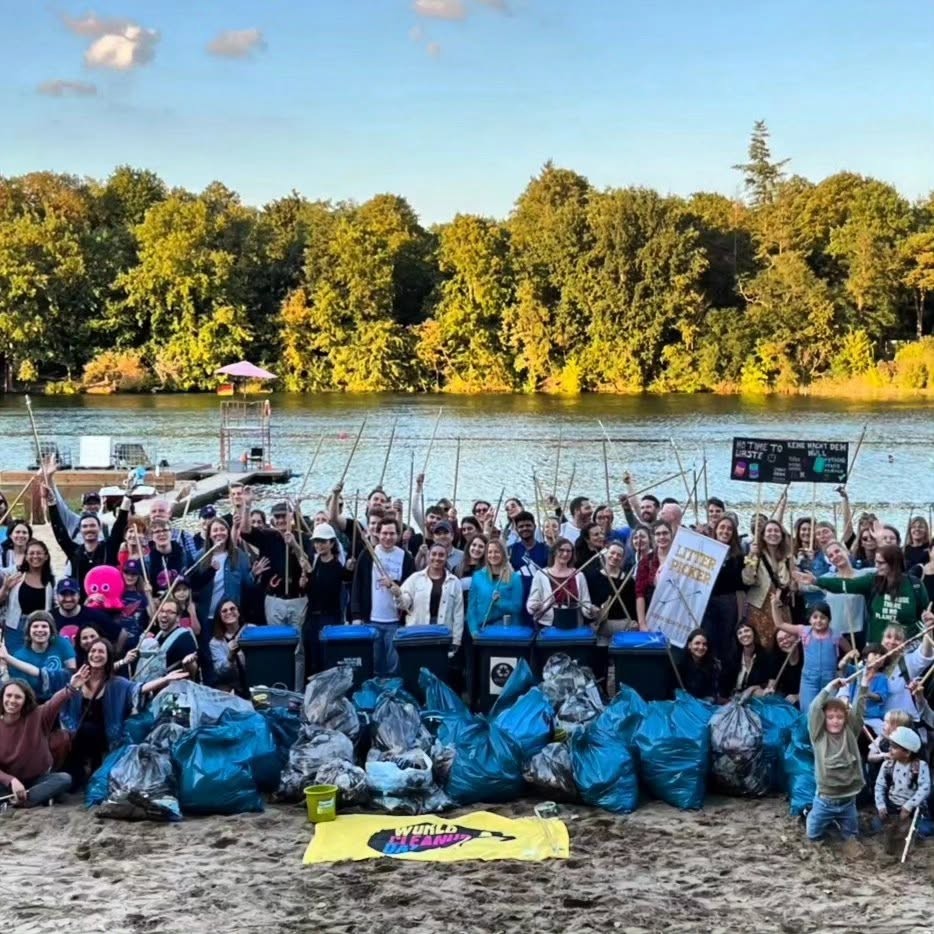
Globaler Großcleanup — BCBT und WCI mobilisieren Berliner Community für stadtweite Cleanup-Aktionen.

WCD Global
05
Apr 2025

One Bag Sprint · Berlin Mitte

Community-Cleanup-Sprint im Rahmen der Kampagne wecreatefuture.world — One Bag per Person, gemeinsam für sauberere Straßen.

WCF Kampagne
15
Jun 2025

WCF Panel · Nachhaltigkeit & Stadt

Öffentliches Diskussionsformat mit Expertinnen aus Stadtplanung, Zivilgesellschaft und Forschung — live und via Stream.

WCF Panel
10
Nov 2025

WCF Podcast Live-Recording

Live-Aufnahme einer WCF Podcast-Episode — mit Studierenden als Hosts und Gästen aus Praxis und Wissenschaft.

WCF Podcast
← Events & Dates
Events · 8.3
Workshops & Panels
Das WCI bietet ganzjährig praxisorientierte Formate für unterschiedliche Zielgruppen — von Design Thinking Workshops für Startups bis zu Expert-Panels für Wissenschaft und Stadtpolitik.
Design ThinkingCo-CreationExpert PanelInnovation Lab

Design Thinking Workshops

Moderierte DT-Sessions für Startups, NGOs und Stadtverwaltungen — mit WCI-Forschenden als Facilitators.

Circular Economy Labs

Halbtägige Intensiv-Workshops zur CE-Modellentwicklung — mit Hackathon-Elementen und Live-Prototyping.

Expert Panels

Öffentliche Diskussionsrunden mit 3–5 Expertinnen zu aktuellen Themen aus Nachhaltigkeitspolitik und Forschung.

Innovation Labs

Mehrtägige Co-Creation-Sprints für interdisziplinäre Teams — oft in Kooperation mit Partneruniversitäten und NGOs.

BCBT Guest-Lecture Series

Öffentliche Vorlesungsreihe an der BCBT mit Gründerinnen, Investorinnen und Nachhaltigkeitsexpertinnen.

Zertifizierungs-Workshops

Begleitende Workshops für Organisationen im ISO 26000 Zertifizierungsprozess — praxisorientiert und methodisch fundiert.

Workshops buchen oder anfragen

Externe Organisationen, NGOs und Stadtverwaltungen können WCI-Workshop-Formate für eigene Kontexte anfragen — maßgeschneidert und auf Wunsch als Inhouse-Format.

  • [email protected]
  • Mindestvorlauf: 6 Wochen · Formate: halbtägig, ganztägig, mehrtägig
← Events & Dates
Events · 8.4
Events Calendar 2026
Vollständige Übersicht aller geplanten WCI-Veranstaltungen für 2026 — nach Datum geordnet, mit Formattyp und Anmeldeinformationen. Stand: Laufend aktualisiert.
28
Jan 2026

Inaugural Event BCBT

Opening Ceremony · BCBT Berlin · Inaugural Launch Event

BCBT
30
Mar 2026

ACASOL Programme Start

Start of the ACASOL Academic Acceleration Programme · BCBT Berlin · Impact Learning

ACASOL
30
Apr 2026

Kiez Connection — Concept Study Presentation

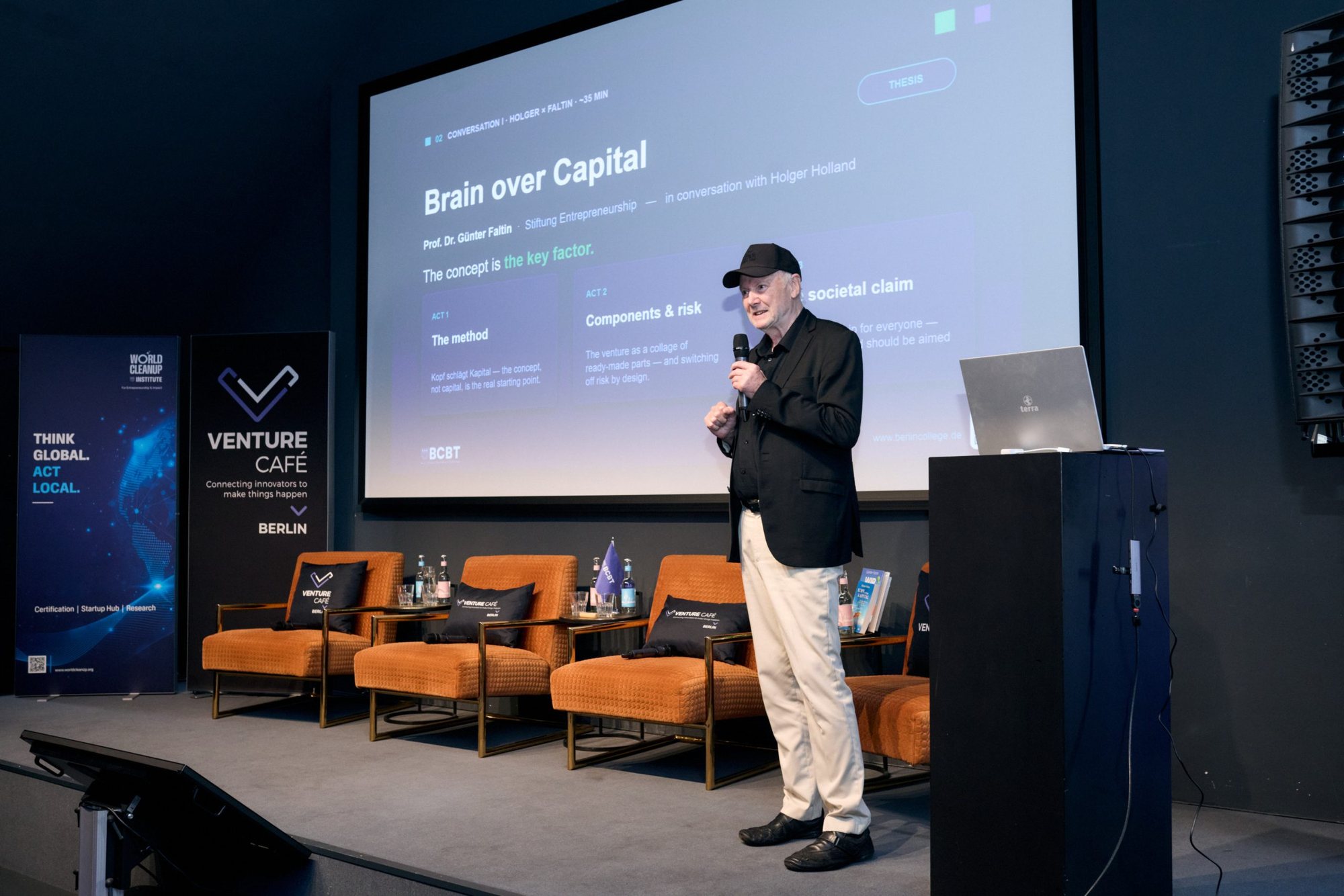
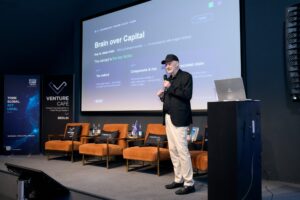
Weekly presentation at Venture Cafe Berlin · Public · recurring weekly

Venture Cafe
07
Apr 2026

🇧🇪 Brüssel — Kick-Off We Create Future

with EU Parliament President Roberta Metsola · European Parliament · Public

WCF EU
28
Mai 2026

We Create Future Panel

Venture Cafe · Berlin · Public Discussion Format · Live & Stream

WCF Panel
28
Mai 2026

Inaugural Event BCBT

Opening Ceremony · BCBT Berlin · Inaugural Launch Event

BCBT
20
Sep 2026

🌍 World Cleanup Day 2026 — Fokusstadt Bonn

Global Cleanup Day · Bonn as WCI Focus City · WCI Community Mobilisation

WCD Global
28
Sep 2026

Inaugural Event BCBT

Opening Ceremony · BCBT Berlin · Inaugural Launch Event

BCBT
13
Dez 2026

Deep Tech Award Berlin

Berlin · Technology & Impact Award · WCI as Partner

Deep Tech
← Back to Overview
06 · Funding & Grants
Funding & Grants
The WCI funds its research and transfer activities through a portfolio of European, national and private third-party sources — complemented by strategic corporate partnerships.
9.1

🇪🇺 Horizon Europe

EU Framework Programme for Research and Innovation — Cluster 4 and Mission Calls as strategic WCI targets.

9.2

🇩🇪 National Funding Programmes

BMBF, BMWK, DFG, Berlin Senate — funding programmes for transfer, sustainability and applied research.

9.3

🏛 Private & Foundation Funding

Foundation funding, philanthropic capital and international environment & social funds for WCI projects.

9.4

🤝 Corporate Partnerships

Strategic corporate partnerships for joint research, impact projects and IEL support.

Drittmittelstrategie WCI

The WCI pursues a diversified funding strategy — targeting at least 60% third-party funding by 2027. Core funding through BCBT; strategic growth through Horizon Europe and foundation grants.

← Funding & Grants
Funding · 9.1
Horizon Europe
Horizon Europe (2021–2027) is the EU’s primary research and innovation funding instrument with a total budget of €95.5 billion. For the WCI, Cluster 5 (Climate, Energy, Mobility), Cluster 6 (Food, Bioeconomy) and the EU Missions are of particular strategic relevance.
EU Framework2021–202795,5 Mrd. €Konsortium
Horizon Europe · Cluster 5

Climate, Energy & Mobility

Research applications on community-based climate action and urban circular economy in partnership with EU universities.

In Antragsvorbereitung
EU Mission · 100 Climate-Neutral Cities

Cities Mission

WCI as research partner for a Berlin pilot project under the EU Mission for 100 climate-neutral cities by 2030.

Discussions active
Horizon Europe · MSCA

Marie Skłodowska-Curie Actions

Postdoc fellowship applications for WCI researchers in the areas of impact measurement and social innovation.

In Planung

Consortium Building

The WCI actively seeks EU university and NGO partners for joint Horizon applications — expressions of interest welcome at any time.

EU Office Support

Weekly advisory hours on Horizon Europe applications — open to WCI researchers and external partners.

Open Science Policy

All funded WCI publications are published Open Access — in compliance with fundings requirements.

← Funding & Grants
Funding · 9.2
National Funding Programmes
At national level, the WCI addresses funding programmes from BMBF (Education and Research), BMWK (Economic Affairs and Climate Action), DFG, and specific Berlin Senate programmes for transfer and sustainability.
BMBFBMWKDFGBerliner Senat
← Funding & Grants
Funding · 9.3
Private & Foundation Funding
Foundation funding and philanthropic capital complement the WCI’s public funding — particularly for community projects, international activities and the development of the certification network that are difficult to finance through conventional research grants.
StiftungenPhilanthropieImpact InvestingInternational
Environmental Foundation · Project Funding

WCF Community Initiative Fund

Foundation funding for We Create Future community projects — supporting local cleanup actions and educational programmes.

Active · annually renewable
International Climate Foundation

Global Cleanup Research Grant

International research grant for impact research on global community cleanup (Cluster 4.1).

Antrag eingereicht
Sozialinnovationsfonds

Impact Entrepreneurship Fellowship

Fellowships for IEL startups with exceptional societal impact — funding the startup phase for 6–12 months.

Discussions ongoing

Building Foundation Partnerships

The WCI seeks strategic foundation partnerships for multi-year programme funding — ideally from 3 years duration.

Impact Reporting for Funders

All funders receive structured impact reports based on WCI Cluster 4.4 methodology.

Named Funding

Research chairs, fellowships and programme spaces can be named through philanthropic funding.

Fundraising Contact

[email protected] — für alle Anfragen zu Stiftungs- und Philanthropiepartnerschaften.

← Funding & Grants
Funding · 9.4
Corporate Partnerships
Strategic partnerships with companies enable joint research projects, co-financing of IEL programmes and the development of practical testing grounds for circular economy solutions — with measurable value for both sides.
B2B KooperationCo-FinanzierungAuftragsforschungPilotprojekte
Auftragsforschung

Corporate Research Contracts

Companies commission the WCI for specific research projects — e.g. CE analysis, impact assessment, sustainability market research.

Continuously available
IEL Sponsor

Startup Programme Sponsoring

Companies co-finance IEL startups and receive access to pitches, talent pool and joint pilot projects in return.

Partner gesucht
CE Lab Partner

Circular Economy Labs

Companies bring real-world challenges and co-finance CE hackathons and lab projects — tackled together with WCI teams.

Kooperationsanfragen offen

Partnership Packages

The WCI offers structured cooperation packages for companies — from one-year research collaborations to multi-year strategic partnerships.

  • [email protected]
  • Initial consultation: within 5 working days — free of charge and non-binding
  • Packages from €5,000 annually · contract research billed by effort
Legal
Legal Disclosure

Information in accordance with section § 5 Digital Services Law (DDG)

Company Name
World Cleanup Institute at Berlin College of Business and Technology (“WCI”, “we”)

Registered Office
Lohmühlenstraße 65
12435 Berlin
Germany

Contact
[email protected]

Commercial Register
District Court of Charlottenburg
Registration number HRB 264473 B

Director

Hon.-Prof. Holger Holland
[email protected]

Responsible for Content

Hon.-Prof. Holger Holland
World Cleanup Institute, BCBT Berlin

Limitation of Liability for Content

The contents of this website have been compiled with the greatest possible care. However, the World Cleanup Institute does not guarantee the accuracy, completeness or timeliness of the information provided. As a service provider, we are responsible for our own content on these pages in accordance with § 7 para. 1 TMG. According to §§8–10 TMG, we are not obliged to monitor transmitted or stored third-party information. Obligations to remove or block the use of information under general law remain unaffected.

Limitation of Liability for Links

Our website contains links to external websites of third parties over whose content we have no influence. We cannot therefore accept any liability for this external content. The respective provider or operator of the linked pages is always responsible for the content. Upon becoming aware of legal violations, we will remove such links immediately.

Copyright

The content and works created by the site operators on these pages are subject to German copyright law. Duplication, processing, distribution and any form of commercialisation beyond the scope of copyright law require the prior written consent of the respective author or creator. Downloads and copies of this site are only permitted for private, non-commercial use.

Last updated: April 2026 · World Cleanup Institute at Berlin College of Business and Technology
Legal
Privacy Policy
Welcome to the World Cleanup Institute privacy notice. This privacy policy informs you about the nature, scope and purpose of the processing of your personal data by the data controller in accordance with Articles 13 and 14 of the General Data Protection Regulation (GDPR). The definitions of the GDPR, in particular according to Art. 4, are used as a basis.

1.1 Controller

The controller according to data protection law is:

World Cleanup Institute at Berlin College of Business and Technology (“WCI”, “we”)
Lohmühlenstraße 65, 12435 Berlin, Germany
E-mail: [email protected]

1.2 Data Protection Officer

You can reach our data protection contact as follows:

Data Protection Officer
World Cleanup Institute at Berlin College of Business and Technology
Lohmühlenstraße 65, 12435 Berlin, Germany
E-mail: [email protected]

2. Details of Data Processing

2.1 Website Operation

When you visit our website, we process personal data as follows. Within any consent management, you may consent to or object to processing based on legitimate interest. You can adjust your preferences at any time.

2.1.1 Provision of Website Content

Purpose: Establish a technical connection between your device and our website; maintain and improve website functionality; enhance information and data security (e.g., data stored in log files).

Categories of Processed Data: IP address, browser type and version, internet service provider, date and time of access, referring third-party websites.

Storage Period: Session data is deleted at the end of the session; log files after 7 days or upon anonymisation.

Legal Basis: Art. 6(1)(f) GDPR (legitimate interests).

2.2 Contact via Website or E-mail

If you contact us via e-mail or a contact form, we process the data you provide to handle your enquiry.

Purpose: Enable communication with the WCI; respond to enquiries about research, partnerships and events.

Categories of Processed Data: Name, e-mail address, message content, IP address and log data.

Storage Period: Data is retained for 3 months after receipt and response to the enquiry.

Legal Basis: Art. 6(1)(a) GDPR (consent); Art. 6(1)(f) GDPR (legitimate interest in responding to enquiries).

2.3 External Services & Third-Party Content

Google Fonts: This website loads fonts from Google Fonts (fonts.googleapis.com). Your IP address is transmitted to Google LLC. Legal basis: Art. 6(1)(f) GDPR. Google LLC is certified under the EU–US Data Privacy Framework.

Unsplash: Header images are loaded via Unsplash (unsplash.com) as static CDN assets. No personal data is transmitted to Unsplash in the process.

2.4 Funding & Grant Enquiries

If you submit a funding or grant enquiry to the WCI, we process the data you provide for the purpose of evaluating and responding to the application.

Categories of Processed Data: Name, organisation, e-mail address, phone number (optional), project information.

Storage Period: Data is retained for up to 6 months after conclusion of the enquiry process, unless extended by consent.

Legal Basis: Art. 6(1)(a) GDPR (consent); Art. 6(1)(b) GDPR (contract initiation).

3. Rights of Data Subjects

If your personal data is processed, you are a data subject under the GDPR and are entitled to the following rights:

  • 3.1 Right of Access (Art. 15) — Request confirmation of whether we process your personal data and obtain details on processing purposes, categories, recipients, retention periods and your rights.
  • 3.2 Right to Rectification (Art. 16) — Request correction or completion of your personal data without undue delay.
  • 3.3 Right to Restriction (Art. 18) — Request restriction of processing if you contest accuracy, processing is unlawful, or you require data for legal claims.
  • 3.4 Right to Erasure (Art. 17) — Request deletion of your personal data where processing is no longer necessary or lawful.
  • 3.5 Right to Data Portability (Art. 20) — Receive your personal data in a structured, machine-readable format.
  • 3.6 Right to Object (Art. 21) — Object to processing based on legitimate interests at any time.
  • 3.7 Right to Revoke Consent (Art. 7(3)) — Revoke any consent at any time; revocation does not affect the lawfulness of prior processing.

To exercise your rights, contact: [email protected]

3.9 Right to Lodge a Complaint (Art. 77)

You have the right to lodge a complaint with a supervisory authority — typically in your place of residence, work or the location of the alleged infringement. For the World Cleanup Institute, the relevant authority is:

Berliner Beauftragte für Datenschutz und Informationsfreiheit
(Berlin Commissioner for Data Protection and Freedom of Information)
Alt-Moabit 59–61, 10555 Berlin, Germany
[email protected]

4. Currency and Changes

This privacy policy is valid in its current version. We reserve the right to update it in response to legal or operational changes. The latest version is always available on this website.

Last updated: April 2026 · World Cleanup Institute at Berlin College of Business and Technology