

Start your 15-day Pixel Break challenge →
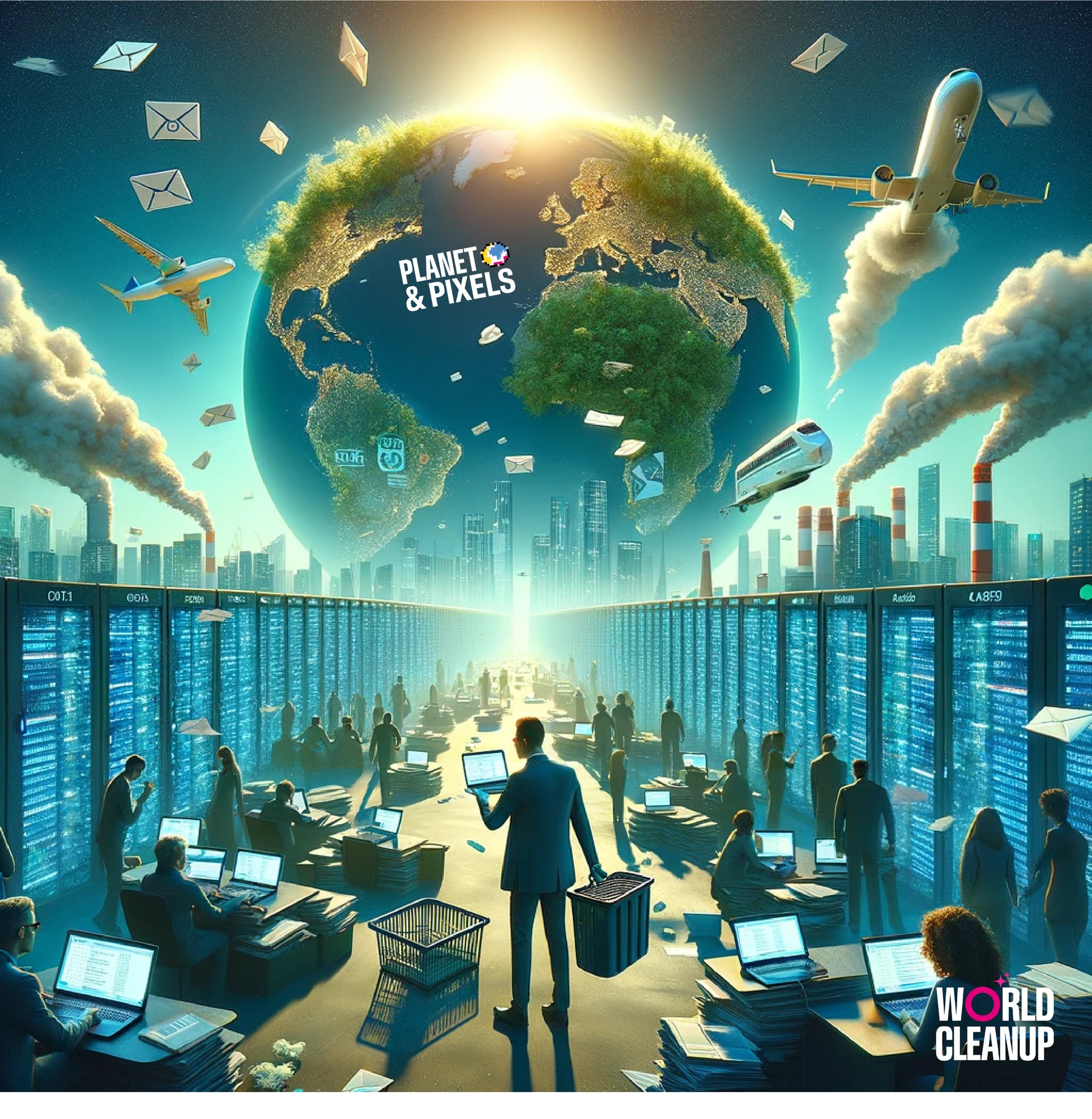
The workshop series
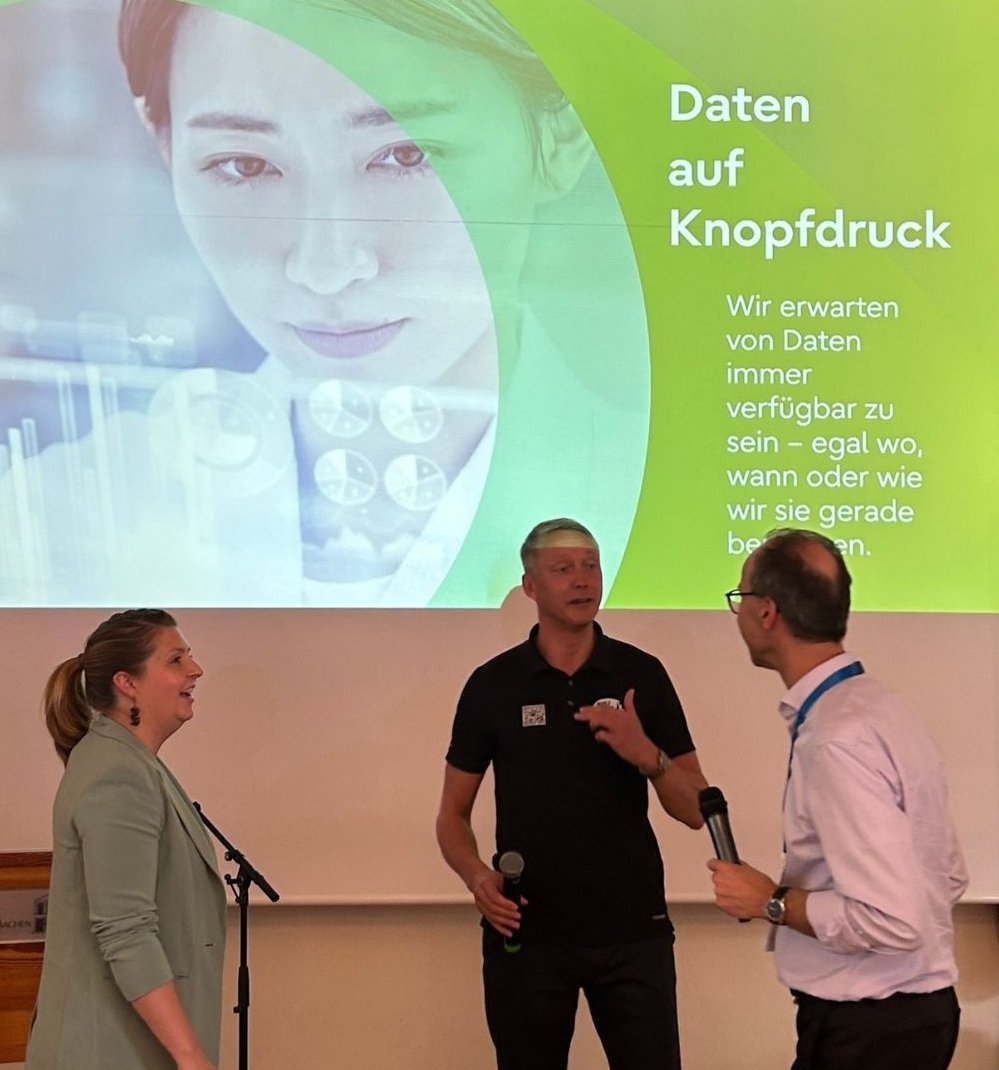
The workshop “Nachhaltige Datenkultur” (sustainable data culture) builds awareness in three modules. It combines short inputs with group discussions; on 12 March 2025 it was held as an impulse workshop at THEX, the Thuringian centre for business start-ups.
How digital chaos burdens our planet: data on demand, the hidden share of unused data and the footprint of storage and e-mail.
Why a data culture is more than a shared Teams channel: the mental side of digital clutter, stress and overload, strategies for digital balance.
Digital habits and routines: practical strategies, the 5S Digital model and the Digital Cleanup Day.
What participants take away: awareness of their ecological footprint in the digital world, new impulses for handling data, new digital habits, and practical steps towards less stored data and less personal load in a world full of information. A certificate is available to those who complete the accompanying playbook.

Olfi with his World Cleanup Day 2025 certificate. Certificates are issued with EQA SCE as wallet-based credentials. Photo: Planet & Pixels
Pixel Breaks: five minutes a day

Your 15-day Pixel Break calendar. One door a day, always at 12:00, always five minutes.
0 of 15 done
Like an advent calendar: one door opens each weekday. Your progress is saved only in this browser, no account, no data sent to us.
Module 1 · From the analogue to the digital world
WhyA clear, small goal turns a good intention into a plan.
HowWrite one sentence: “In 15 days I want…”. Put it where you see it.
WhyEvery newsletter you never read is a small interruption, and data stored and sent for nothing.
HowSearch your inbox for “unsubscribe”. Pick three. Click.
WhySlow breathing helps your body switch from alert to calm.
HowPhone on silent. Breathe in for 4, out for 6. Five times.
WhyWe are interrupted about 275 times a day (Microsoft, 2025). Every notification you switch off is one less.
HowOpen your notification settings. Turn off three apps you don’t need in real time.
WhyA full inbox keeps old tasks in view and slows down every search.
HowSelect everything older than a month. Archive it in one go.
Module 2 · Information and data overload
WhyThe downloads folder is where copies and forgotten files pile up.
HowSort by date. Delete what is older than three months and saved elsewhere.
WhyAfter an interruption, it takes about 25 minutes to get fully back to a task (Gloria Mark).
HowDo Not Disturb for five minutes. Close the laptop.
WhyLong hours at the screen tense neck and shoulders. Standing up resets body and attention.
HowStand up. Roll your shoulders. Five slow breaths.
WhyUnused apps still update, store data and send notifications in the background.
HowFind apps you haven’t opened in a month. Delete one.
WhyClean bookmarks and shortcuts mean shorter searches and less frustration.
HowDelete dead bookmarks. Make one folder for what you need today.
Module 3 · Living and working sustainably
WhyWriting a worry down moves it out of your head and makes it easier to sort.
HowThree lines: what stresses me, what I can change, my first step.
WhyWe look at one screen for about 47 seconds before switching (Gloria Mark). One focused block beats constant checking.
HowTimer on five minutes. Only e-mail. All other tabs closed.
WhyFeeds are built to keep you scrolling. Fewer distracting accounts means more control over your attention.
HowUnfollow five accounts that don’t make you feel better.
WhyFive unreachable minutes show how little is truly urgent.
HowAirplane mode. Look out of the window.
WhyOnly about 15 % of stored data is business-critical. A third is redundant, obsolete or trivial (Veritas, 2016).
HowOpen one old folder. Mark what is R, O or T. Delete or archive.
The programme was first run in our workshop series from 11 February to 3 March 2025. Fifteen repetitions do not yet make a habit automatic; in a study by Lally et al. (2010) it took a median of 66 days for a daily behaviour to become automatic. But they set the cue, the routine and the visible progress on which a habit can grow.
From habit to evidence: Planet & Pixels in the WCRI
Digital Cleanup is part of the WCI Responsibility Framework, the rulebook of the World Cleanup Responsibility Index (WCRI). What starts as a personal Pixel Break can become documented evidence for an organisation: participation in the 15-day programme, data cleaned up or archived, team rules adopted. That is how good digital habits become visible and verifiable.
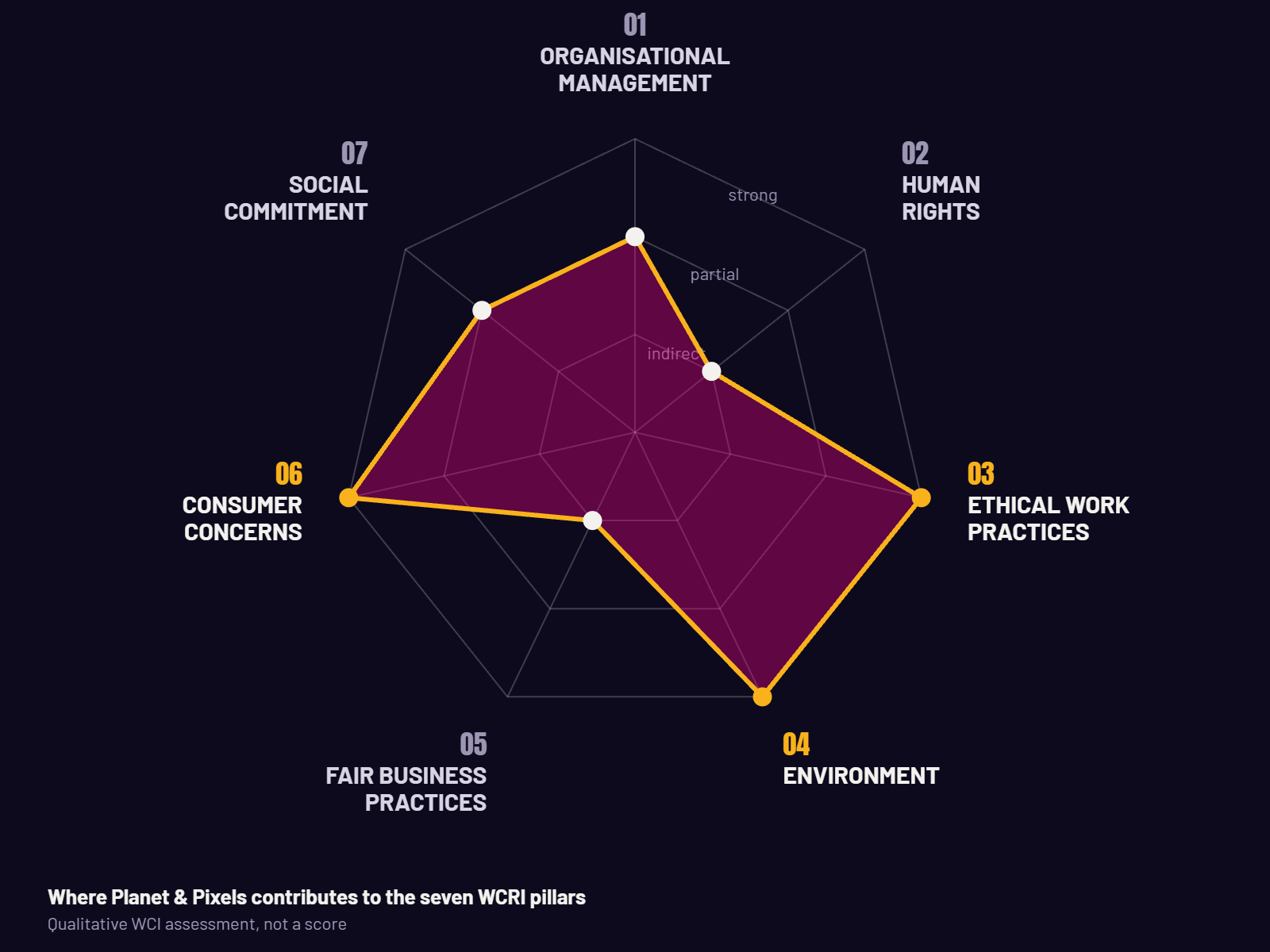
Strongest contribution: 03 Ethical work practices (fewer interruptions, less overload), 04 Environment (less digital waste) and 06 Consumer concerns (data minimisation and storage limitation). The WCRI score is an assessment by the WCI in phase 1 of the index; it is not a certification.
Digital Cleanup Day: Pixel Breaks at scale
Digital Cleanup Day applies the same idea once a year to millions of people: everyone does the same small cleanup at the same time. In 2025 it took place on 15 March, directly after the 15-day programme. According to the organisers, more than 541,800 people in 61 countries and territories took part and deleted 2.3 million gigabytes of unnecessary data (Digital Cleanup Day, 2025). Fujitsu used the day worldwide for:
- sessions on dark data and e-hoarding (“clearing up saves CO₂ and nerves”),
- trainings on using collaboration tools,
- workshops on company-wide CO₂ savings,
- sessions for working life and everyday private life.
transform_D Summit 2025
In March 2025 Let’s Do It Germany presented the Planet & Pixels programme at the transform_D Summit of the Deutsche Stiftung für Engagement und Ehrenamt (DSEE), under the title “Gemeinsam für eine nachhaltige Datenkultur” and with Olfi, the waste monster and learning ambassador of World Cleanup Day, on tour. The DSEE supported a programme of Let’s Do It Germany; the WCI was co-applicant and accompanies these events scientifically. Live polls asked the audience when they last took out their rubbish, and when they last cleaned up their desktop. The talk linked “waste blindness” in the analogue world with waste blindness in the digital world and ended with six steps that everyone can take:
- Create awareness
- Clear structures and simple rules
- Responsibilities and accountability
- Use tools sensibly
- Learn and improve together
- Culture change instead of a one-off action
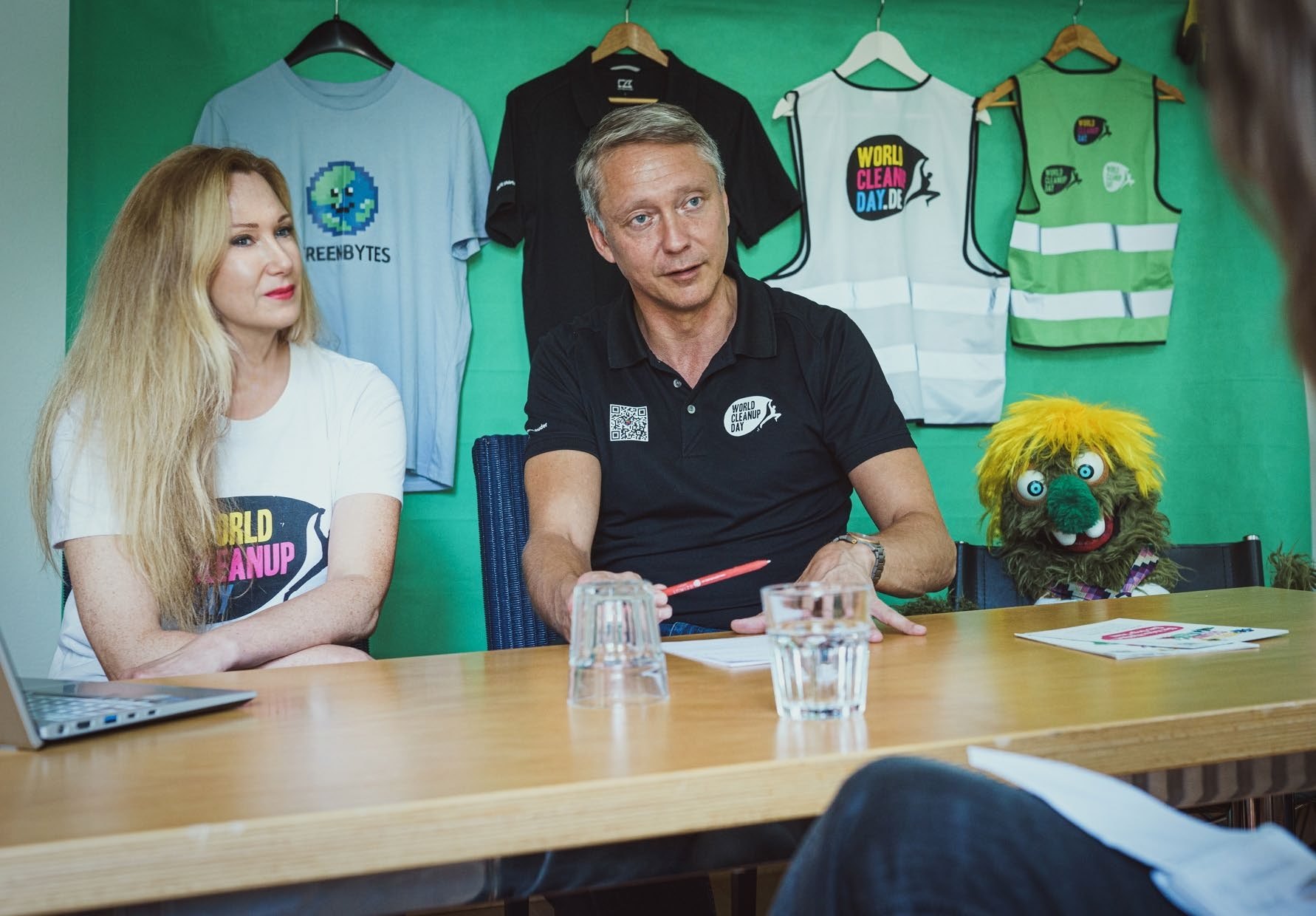
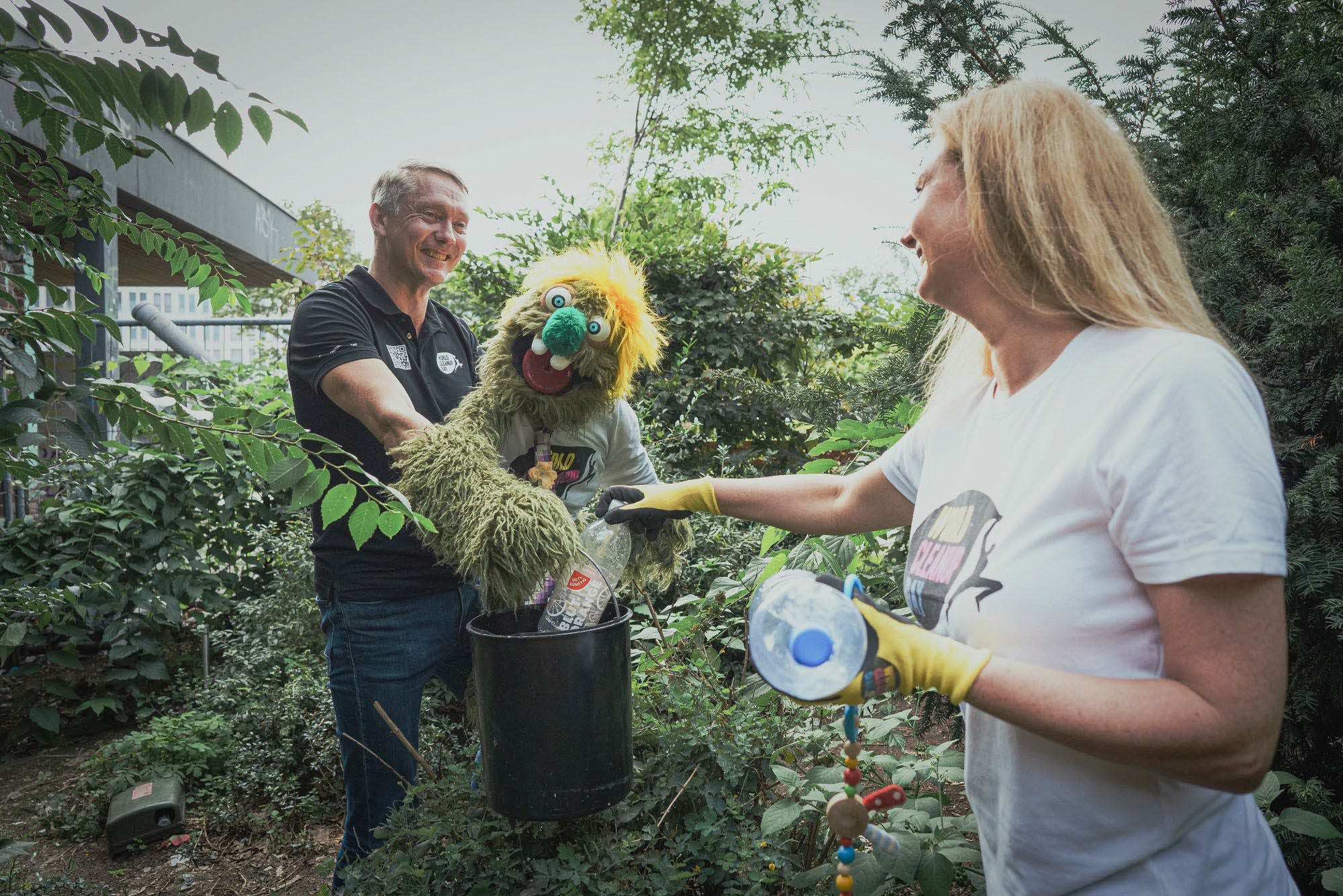
Left: Daniela Schwerdt (ambassador World Cleanup Day Germany), Holger Holland (initiator World Cleanup Day Germany) and Olfi. Right: Olfi at a cleanup. Photos: Planet & Pixels
Why it matters
Storing data that is never used again caused an estimated 5.8 million tonnes of CO₂ in 2020 (Veritas, 2020). Information and communication technology accounts for 2.1–3.9 % of global greenhouse gas emissions, more than aviation at around 2 % (Freitag et al., 2021); projections reach up to 14 % by 2040 (Belkhir & Elmeligi, 2018).
E-mail shows the scale: the number of e-mails sent and received worldwide each day is forecast to rise from 361.6 billion in 2024 to 424.2 billion in 2028 (Statista, 2025). The footprint of a single e-mail depends heavily on the assumptions; Berners-Lee (2010) estimated 0.3 g CO₂e for a spam mail, 4 g for a typical e-mail and 50 g for one with a large attachment. Most stored data is never used again; see the databerg on the Sustainable Data Culture page.
Talks and workshops
Planet & Pixels has been presented at conferences, universities and companies since 2023. The WCI accompanies these events scientifically.
- 18 Mar 2023Digital Cleanup Day
Global action day
- 19 Feb 2024Fujitsu Data Cleanup Week
“Planet and Pixels: Humanity at the Core of Digital Data Cleanup”
- 16 Mar 2024Digital Cleanup Day
Global action day
- 11 Jun 2024RWTH Aachen University, AIP conference
Data-driven innovation for sustainability and twin transformation
- 20 Jun 2024Fujitsu conference, Munich
CIOs and a global citizen movement on generative AI, sustainability and digitalisation
- 20 Sep 2024World Cleanup Day 2024, Berlin
CIOnet, Fujitsu and World Cleanup announce the expansion of the Planet & Pixels campaign
- 14 Nov 2024Leibniz Association, annual conference of the library working group
“Data-Driven Innovation and AI for Sustainability”
- Feb 2025BCBT, Berlin
Learning series with the 15-day Pixel Breaks programme
- 12 Mar 2025THEX, Thuringian centre for business start-ups
Impulse workshop “Digital Cleanup als Schlüssel zu nachhaltiger Datenkultur”
- 15 Mar 2025Digital Cleanup Day
Global action day
- 23 Mar 2025Freie Universität Berlin
Impulse workshop “Nachhaltige Datenkultur”
- Mar 2025transform_D Summit, DSEE
“Gemeinsam für eine nachhaltige Datenkultur” with Olfi
- 22 Oct 2026We Create Future Stage #4
Intelligence in the Loop: AI and sustainable data culture
- 23–26 Oct 2026BCBT Hackathon
Implementation concept in the theme cluster sustainable data culture
Research background
The programme builds on Holger Holland’s thesis “Der Einfluss von Soft Skills auf die nachhaltige Kommunikation von virtuellen Teams in kleinen und mittelgroßen Umweltschutz-NPOs” (2023). It examines how six soft skills (communication, problem solving, teamwork, empathy, self-management and resilience) shape sustainable communication in virtual teams, and proposes lean principles such as the 5S method to reduce the energy footprint of everyday digital work.
In preparation: Global Digital Balance 1990–2040
A white paper currently in preparation asks how the exponential growth of digital data, driven above all by AI, affects global CO₂ emissions, energy demand, ecological costs and planetary boundaries between 1990 and 2040, and which systemic measures can counter these developments.
Partners
FSAS (formerly Fujitsu) is a partner of the programme; CIOnet, the network for CIOs and IT leaders, is a partner of the campaign.


Bring Planet & Pixels to your organisation
Workshops, playbooks and a Digital Cleanup Day for your team: wecreatefuture.world
Sources
- Planet & Pixels (2025): Workshop „Nachhaltige Datenkultur“, 12 March 2025; impulse talk D-Summit, 28 March 2025 (presentation slides).
- Belkhir, L. & Elmeligi, A. (2018): Assessing ICT global emissions footprint: Trends to 2040 & recommendations. Journal of Cleaner Production, 177, 448–463. doi:10.1016/j.jclepro.2017.12.239.
- Berners-Lee, M. (2010): How Bad Are Bananas? The Carbon Footprint of Everything. London: Profile Books.
- Freitag, C. et al. (2021): The real climate and transformative impact of ICT: A critique of estimates, trends, and regulations. Patterns, 2(9), 100340. doi:10.1016/j.patter.2021.100340.
- Veritas Technologies (2020): dark data study, conducted by Vanson Bourne. Report: Computer Weekly, 21 April 2020.
- CIOnet, Fujitsu & World Cleanup (2024): press release „CIOnet, Fujitsu und World Cleanup erweitern innovative ‚Planet & Pixels‘ Kampagne“, 18 September 2024.
- Holland, H.: event archive, holgerholland.de.
- Digital Cleanup Day (2025): Digital Cleanup Day 2025 results, 4 June 2025.
- Lally, P., van Jaarsveld, C. H. M., Potts, H. W. W. & Wardle, J. (2010): How are habits formed: Modelling habit formation in the real world. European Journal of Social Psychology, 40(6), 998–1009. doi:10.1002/ejsp.674.
- Planet & Pixels (2025): Pattern set „Mind Digital Cleanup“, 15-day workshop programme.
- Statista (2025): Forecast of the number of e-mails sent and received worldwide per day, 2021–2028.